
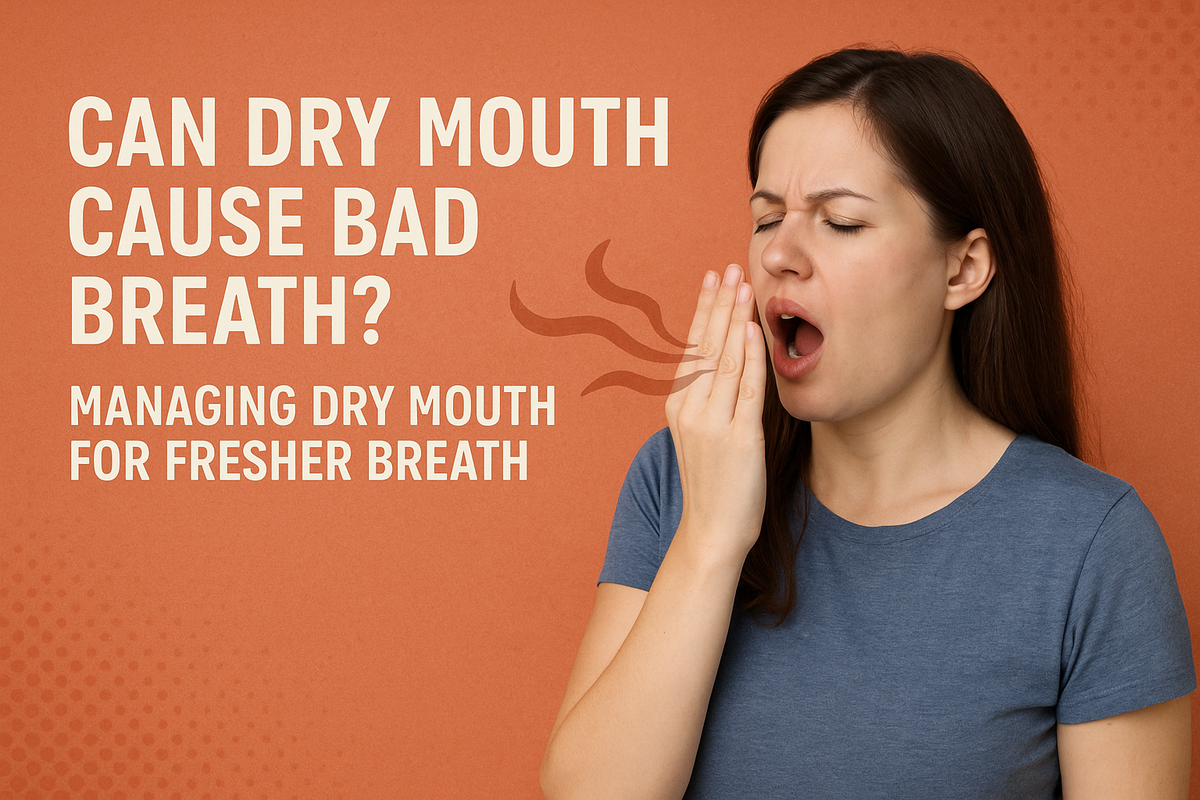
Can Dry Mouth Cause Bad Breath?
Yes. Dry mouth can contribute significantly to bad breath because saliva plays an important role in keeping the mouth naturally clean. When saliva flow is reduced, the conditions inside the mouth can become more favourable for the bacteria associated with unpleasant breath odours.
This is one reason many people notice their breath is worse first thing in the morning. Saliva production naturally decreases during sleep, leaving the mouth drier and reducing its normal cleansing action.
Occasional dryness is common, but persistent dry mouth — also known as xerostomia — can affect comfort, oral health and breath quality. Understanding why it happens can help you decide how best to manage it.
Why Saliva Matters for Fresh Breath
Saliva does much more than simply keep the mouth feeling moist. It continuously helps wash away food debris, supports the natural balance within the mouth and reduces the accumulation of material that oral bacteria can break down.
Some bacteria in the mouth produce volatile sulphur compounds (VSCs). These gases are among the compounds commonly associated with oral malodour.
When the mouth becomes dry, there is less saliva available to provide its normal cleansing action. The tongue can also develop a thicker coating, particularly towards the back of the tongue, creating an environment where odour-associated bacteria can become more active.
This connection between saliva, tongue coating and bacterial activity explains why dry mouth and bad breath frequently occur together.
What Can Cause Dry Mouth?
Dry mouth can have many causes, and sometimes several factors are involved at the same time. Common contributors include:
- Not drinking enough water
- Sleeping with the mouth open
- Mouth breathing or nasal congestion
- Stress or anxiety
- Alcohol consumption
- Smoking or vaping
- Some medications
- Age-related changes in saliva production
- Medical conditions that affect saliva flow
Many commonly prescribed medicines can also cause mouth dryness as a side effect. If persistent dry mouth begins after starting or changing medication, speak with your doctor, dentist or pharmacist rather than stopping medication yourself.
Signs That Your Mouth May Be Too Dry
Dry mouth does not always feel simply like being thirsty. People may notice:
- A sticky or dry sensation inside the mouth
- Thick or stringy saliva
- A dry or coated tongue
- Frequent thirst
- Difficulty speaking, chewing or swallowing dry foods
- Dry or cracked lips
- Changes in taste
- Bad breath
Persistent dryness is also important from a dental perspective. Saliva helps protect the teeth and oral tissues, so prolonged reductions in saliva can increase susceptibility to tooth decay and other oral problems.
Why Dry Mouth Can Make Morning Breath Worse
Morning breath provides a useful example of the relationship between saliva and breath odour.
While we sleep, saliva production decreases naturally. Swallowing also becomes less frequent, so there is less mechanical cleansing of the mouth. If you sleep with your mouth open or breathe through your mouth, the drying effect can be even greater.
During this period, bacteria continue breaking down proteins and other material within the mouth. The resulting volatile sulphur compounds can accumulate until normal saliva flow, drinking, eating and oral cleaning resume after waking.
This is why morning breath often improves relatively quickly after drinking water, cleaning the teeth and tongue and beginning normal daytime activity.
The Tongue Is Particularly Important
For many people with oral malodour, the tongue deserves particular attention.
The surface of the tongue contains numerous grooves and papillae that can retain bacteria, food debris and shed cells. A dry mouth can make this coating more noticeable because there is less saliva available to help clear it naturally.
Gentle tongue cleaning can therefore be a useful part of daily oral hygiene, particularly when a visible coating is present. It should complement normal toothbrushing and interdental cleaning rather than replace them.
How to Manage Dry Mouth and Support Fresher Breath
The most appropriate approach depends on why your mouth is dry. For mild or occasional dryness, several simple measures may help.
Drink Water Regularly
Regular water intake can provide immediate relief from dryness and help clear loose debris from the mouth. Small, frequent amounts may be more comfortable than waiting until you feel very thirsty.
Encourage Natural Saliva Flow
Chewing sugar-free gum can stimulate saliva production for people whose salivary glands are still functioning. This can be particularly useful after meals or during periods when the mouth feels dry.
Sugar-free Recaldent chewing gum is one option available for people who want to stimulate saliva while chewing.
Clean the Tongue Gently
If tongue coating is present, gentle daily tongue cleaning can help remove some of the material on which odour-producing bacteria act. Excessive scraping is unnecessary and can irritate the tongue.
Consider Overnight Dryness
For some people, dryness is most noticeable while sleeping. Products designed to remain in the mouth for longer periods can be useful when drinking water or chewing gum is impractical.
XyliMelts, for example, are designed to dissolve gradually in the mouth and are commonly used by people experiencing overnight oral dryness.
Use Moisturising Products When Needed
Oral moisturising gels can provide temporary lubrication when natural saliva is insufficient. GC Dry Mouth Gel is one example designed specifically for oral dryness.
When Dry Mouth and Bad Breath Persist Together
Dry mouth may explain bad breath in some people, but persistent halitosis can have several contributing factors.
Dental plaque, gum problems, tongue coating, reduced saliva, diet, smoking and other oral factors can all influence breath. Simply masking the smell with mints or strongly flavoured mouthwash does not identify why the odour is occurring.
At BreezeCare, our approach to persistent bad breath is based on understanding the oral environment and the factors that may be contributing to odour rather than relying only on temporary flavour or fragrance.
You can read more about the causes of bad breath and our approach to bad breath.
Dry Mouth Support Within the KForce Approach
When dryness is contributing to breath problems, supporting saliva and oral moisture can form part of a broader oral-care routine.
The KForce range was developed by BreezeCare around a routine-based approach to oral and breath care. For people where dry mouth is a significant part of the problem, the KForce Complete Dry Mouth System brings together oral cleaning and dry-mouth support within one structured routine.
People primarily concerned about persistent bad breath can also learn about the KForce Halitosis Starter Kit.
When Should You See a Dentist or Doctor?
Occasional mouth dryness is usually straightforward, but persistent or unexplained dry mouth deserves professional assessment.
Speak with your dentist or doctor if dryness is ongoing, interferes with eating or swallowing, is accompanied by frequent dental problems, or began after a change in your health or medication.
Persistent bad breath should also be investigated rather than continually masked, particularly when good oral hygiene does not resolve it.
The Bottom Line
Dry mouth can contribute to bad breath because reduced saliva changes the natural cleansing environment of the mouth. Less saliva can allow tongue coating, debris and odour-associated bacterial activity to become more prominent.
Regular hydration, stimulating saliva where appropriate, gentle tongue cleaning and managing the underlying reason for dryness can all help. When dry mouth or bad breath persists, identifying the cause is more useful than simply trying to cover the odour.
BreezeCare has worked with bad-breath and oral-care concerns in Australia since 1995, and this relationship between saliva, tongue coating and the oral environment remains an important part of understanding persistent breath problems.


