
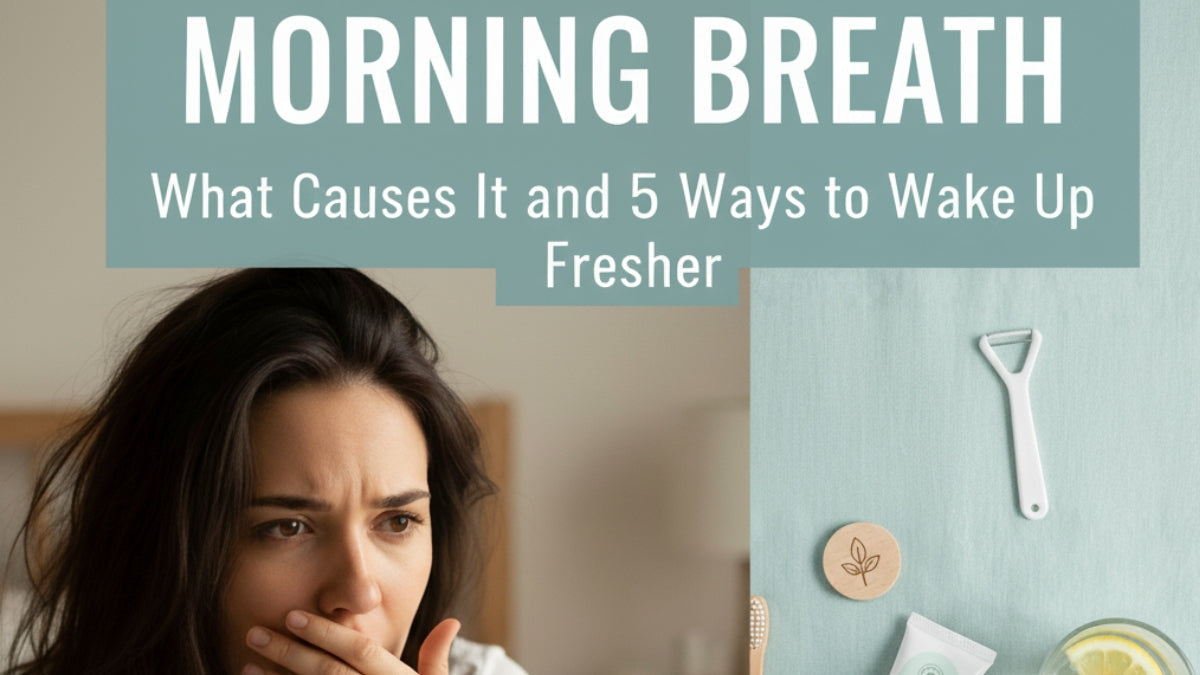
Waking with some degree of unpleasant breath is extremely common. During sleep, the conditions inside the mouth change: saliva flow falls, swallowing becomes less frequent and the natural cleansing activity that occurs while we are awake is reduced.
This creates an environment in which odour-producing compounds can become more noticeable by morning.
For most people, this is normal morning breath and improves after drinking, eating and carrying out normal oral hygiene. However, breath odour that remains noticeable throughout the day may have different contributing factors and deserves a closer look.
Why Does Your Breath Smell in the Morning?
The main reason is the reduction in saliva flow that occurs while we sleep.
Saliva performs several important functions inside the mouth. It helps clear food debris, supports the natural balance of the oral environment and continually moves material away from the surfaces of the teeth, gums and tongue.
At night, saliva production naturally decreases. We also swallow far less frequently. As a result, the mouth becomes a relatively stagnant environment for several hours.
During this time, oral bacteria can break down proteins and other material present in the mouth. Some of these bacteria produce volatile sulphur compounds (VSCs) — gases associated with the characteristic odour of bad breath.
The tongue is particularly important because its large, textured surface can retain bacteria, dead cells, food debris and other material.
Why the Tongue Matters
The back portion of the tongue contains many small grooves and irregular surfaces. These can provide an environment in which bacterial activity and odour-producing compounds develop.
A visible tongue coating does not automatically mean that someone has halitosis. However, tongue coating can be an important contributor to oral malodour in some people.
This is why tongue cleaning can be useful as part of a broader oral hygiene routine rather than relying solely on brushing the teeth.
Other Factors That Can Make Morning Breath More Noticeable
Mouth breathing while sleeping
Breathing through the mouth can increase oral dryness overnight. This may occur because of nasal congestion, sleeping habits or other factors affecting nasal breathing.
Dry mouth
Some people naturally experience greater oral dryness than others. Medications, dehydration and reduced saliva production can also contribute to a dry mouth.
When there is less saliva available, the mouth loses some of its natural cleansing activity and breath odour may become more noticeable.
Oral hygiene before bed
Plaque, food debris and material remaining between the teeth or around the gums provide additional material for oral bacteria during the night.
Thorough brushing and interdental cleaning before sleeping therefore remain important parts of controlling the oral environment overnight.
Gum and dental problems
Persistent inflammation around the gums, plaque accumulation, untreated dental problems and areas that are difficult to clean can sometimes contribute to persistent oral malodour.
Food, alcohol and smoking
Garlic, onion and certain other foods contain compounds that can remain detectable on the breath after eating. Alcohol may contribute to oral dryness, while smoking can affect both breath odour and the oral environment.
Morning Breath or Persistent Bad Breath?
This is an important distinction.
Normal morning breath is generally most noticeable immediately after waking and improves once normal saliva flow resumes and the mouth is cleaned.
Persistent bad breath may remain despite brushing, eating, drinking and normal daily activity.
If breath odour continues through the day, simply treating it as “morning breath” may overlook other contributing factors.
Persistent halitosis can have several possible oral and non-oral contributors, so understanding when the odour occurs and how long it lasts can be useful when investigating its source.
5 Ways to Reduce Morning Breath
1. Clean your teeth thoroughly before bed
Brush with fluoride toothpaste before sleeping and clean between the teeth using floss or another appropriate interdental cleaning method.
The objective is to reduce the amount of plaque and debris remaining in the mouth during the hours when saliva flow is naturally lower.
2. Include your tongue in your oral hygiene routine
Tooth brushing alone does not necessarily remove material retained on the tongue.
Gentle tongue cleaning can help remove accumulated coating and debris. Avoid aggressive scraping, which can irritate the tongue without providing additional benefit.
3. Pay attention to dry mouth
Staying adequately hydrated during the day is important for normal saliva function. If your mouth regularly feels unusually dry — particularly overnight — it may be worth considering what is contributing to that dryness rather than simply trying to cover the resulting breath odour.
4. Consider mouth breathing and nasal congestion
If you frequently wake with a very dry mouth, mouth breathing during sleep may be contributing.
Persistent nasal congestion or difficulty breathing comfortably through the nose should be discussed with an appropriate health professional rather than treated solely as a breath problem.
5. Maintain regular dental care
Regular dental examinations can identify plaque-retentive areas, gum problems, tooth decay and other oral conditions that may contribute to persistent bad breath.
If your breath remains unpleasant throughout the day despite good oral hygiene, a dental assessment is a sensible starting point.
Should You Use Mouthwash for Morning Breath?
Mouthwash can be part of an oral hygiene routine, but the sensation of a strong flavour should not be confused with identifying or addressing the source of an odour.
If tongue coating, plaque accumulation or oral dryness is contributing, simply masking the smell temporarily does not address those factors.
For people who experience dry mouth, the formulation of a mouthwash may also be relevant. An alcohol-free formulation may be preferable where avoiding additional oral dryness is a priority.
What If Bad Breath Doesn't Disappear After the Morning?
If the odour disappears after normal morning hygiene and does not return until the following morning, it is more consistent with ordinary morning breath.
If it remains noticeable during the day or repeatedly returns soon after cleaning, it may be useful to look beyond the morning routine.
At BreezeCare, our approach to persistent bad breath is to consider the oral environment rather than simply trying to cover an odour with flavour.
You can read more about common causes of bad breath, learn about tongue-related odour, or see our approach to persistent bad breath.
Morning Breath: The Key Point
Some morning breath is normal. Saliva flow decreases while we sleep, swallowing becomes less frequent and odour-producing compounds can accumulate within the mouth.
Good evening oral hygiene, appropriate tongue cleaning and maintaining a healthy oral environment can help reduce it.
The more important question is whether the odour disappears once the day begins. Breath that remains persistently unpleasant deserves to be considered differently from ordinary morning breath.


