
Dry mouth can be more than an uncomfortable feeling. Saliva helps keep the mouth moist, supports normal chewing and swallowing, washes away food debris and helps protect the teeth.
One of the simplest ways to encourage saliva flow during the day is also one of the most familiar: chewing sugar-free gum. Chewing activates the salivary glands, which is why sugar-free gum is commonly recommended as part of dry-mouth care when a person is still able to produce saliva.
The important distinction
Chewing is what stimulates saliva. Recaldent® (CPP-ACP) is an oral-care ingredient found in some sugar-free chewing gums. Recaldent should not be confused with the saliva-stimulating effect produced by chewing itself.
Does sugar-free gum help with dry mouth?
Yes, chewing sugar-free gum can help stimulate saliva flow in people who still have functioning salivary glands.
The action of chewing sends signals that activate the salivary glands. This increases saliva production while the gum is being chewed and can temporarily make the mouth feel more comfortable and moist.
Australian health authorities include chewing sugar-free gum among the practical measures that may help people experiencing dry mouth. Healthdirect recommends sugar-free gum to stimulate saliva, while the Australian Dental Association notes that both the chewing action and flavouring can encourage saliva flow.
Healthdirect: Dry mouth syndrome
Australian Dental Association: Dry Mouth
Why is saliva so important?
Saliva performs several everyday functions that are easy to overlook until the mouth becomes dry.
- It helps keep the mouth and throat moist.
- It lubricates food during chewing and swallowing.
- It helps wash away food particles and debris.
- It contributes to the natural balance of the oral environment.
- It helps protect teeth from decay.
When saliva flow is reduced, people may notice a dry or sticky feeling, changes in taste, difficulty speaking or swallowing, bad breath or an increased tendency towards dental problems.
How does chewing gum increase saliva?
Saliva production naturally increases when we eat and chew. Chewing gum uses the same physical response without requiring another meal.
The combination of chewing movement, taste and oral stimulation encourages the salivary glands to release more saliva. This is why chewing gum can be particularly useful between meals or after eating and drinking, when brushing may not be practical.
The effect depends on having some remaining salivary gland function. Someone with severe dry mouth or very little saliva production may need other approaches recommended by a dentist, doctor or pharmacist.
Why choose sugar-free gum rather than regular gum?
If gum is being chewed regularly to stimulate saliva, sugar-free gum is the more appropriate choice for oral health.
Regular chewing gum can contain fermentable sugars that oral bacteria can use to produce acids. Sugar-free gum allows the chewing response to stimulate saliva without repeatedly introducing ordinary sugar into the mouth.
Some sugar-free gums use sweeteners such as xylitol, while others use different sugar-free sweetening systems. Not every sugar-free gum has the same ingredients, so it is worth checking the individual product label if a particular ingredient is important to you.
Quick answer
Does chewing gum increase saliva?
Yes. Chewing stimulates the salivary glands and can temporarily increase saliva flow. For people experiencing dry mouth, health authorities commonly recommend sugar-free rather than sugar-containing gum.
What is Recaldent gum?
Recaldent® is the trademark name for CPP-ACP — casein phosphopeptide-amorphous calcium phosphate.
CPP-ACP is derived from milk protein and is designed to carry calcium and phosphate in a soluble form. It has been incorporated into a number of oral-care products, including certain chewing gums and dental creams.
A Recaldent chewing gum therefore combines two separate features:
- The physical act of chewing, which stimulates saliva.
- CPP-ACP (Recaldent), which is included as an oral-care ingredient in the gum formulation.
This distinction matters. Recaldent itself should not be described as a treatment for dry mouth, and CPP-ACP is not what causes the salivary glands to produce more saliva. The saliva-stimulating effect comes primarily from chewing.
For a more detailed explanation of CPP-ACP and how Recaldent gum differs from ordinary chewing gum, see our guide:
What Is Recaldent? A Guide to CPP-ACP and Recaldent Chewing Gum
Milk protein allergy
CPP-ACP (Recaldent) is derived from milk protein. Products containing CPP-ACP are not suitable for people with a milk protein allergy. Always check the individual product ingredients and labelling before use.
Is Recaldent gum suitable for someone with a dry mouth?
For someone who can chew gum comfortably and still has functioning salivary glands, a sugar-free Recaldent chewing gum can provide the same mechanical saliva stimulation from chewing as other suitable sugar-free gums.
The reason for choosing a Recaldent gum rather than an ordinary sugar-free gum would therefore not be that Recaldent “treats” dry mouth. It is that Recaldent gum is a sugar-free oral-care chewing gum containing CPP-ACP, allowing the user to combine the saliva-stimulating action of chewing with a gum specifically formulated for oral care.
Can chewing gum help medication-related dry mouth?
Many medicines can contribute to dry mouth. If the salivary glands retain some function, chewing sugar-free gum may help stimulate saliva and provide temporary relief from the sensation of dryness.
However, persistent medication-related dry mouth should be discussed with your doctor, dentist or pharmacist. Do not stop or change a prescribed medicine because you suspect it is causing dry mouth without first obtaining medical advice.
When might you chew sugar-free gum?
People commonly use sugar-free gum at practical points during the day, including:
- after meals or snacks
- after coffee or other drinks
- between regular brushing times
- while travelling or commuting
- during work or study when the mouth feels dry
There is no single chewing schedule that is appropriate for everyone with dry mouth. The underlying cause and severity of the dryness matter, and gum may not be suitable for people with jaw pain, chewing difficulties or certain dental conditions.
Can chewing gum protect teeth when you have a dry mouth?
Saliva is an important part of the mouth's natural defence system, and people with persistent dry mouth can have a higher risk of tooth decay and other oral problems.
Stimulating saliva with sugar-free gum can be one useful part of an oral-care routine, but it does not replace brushing with fluoride toothpaste, interdental cleaning, appropriate professional care or treatment of the underlying cause of dry mouth.
What should someone with dry mouth look for in chewing gum?
If you are choosing a gum primarily to encourage saliva flow, consider the following:
- Choose sugar-free gum.
- Check that you can comfortably chew gum without jaw pain or discomfort.
- Read the ingredient list if you have food allergies or sensitivities.
- Remember that additional oral-care ingredients vary between products.
- Seek professional advice if your dry mouth is persistent, severe or unexplained.
For Recaldent products in particular, remember that CPP-ACP is milk-derived and should not be used by people with a milk protein allergy.
When should persistent dry mouth be investigated?
Occasional dryness can occur for many everyday reasons, but persistent dry mouth can also be associated with medicines, dehydration, medical conditions or problems affecting the salivary glands.
Speak with a dentist or doctor if your mouth remains persistently dry, particularly if you also experience difficulty eating or swallowing, frequent dental decay, mouth soreness, altered taste or other ongoing symptoms.
Dry mouth caused by an underlying condition or medication may require more than saliva stimulation alone.
Frequently asked questions
Does sugar-free gum help dry mouth?
Chewing sugar-free gum can stimulate saliva production and may help people who have some remaining salivary gland function. It is commonly recommended as one practical measure for managing the sensation of dry mouth.
What is the best gum for dry mouth?
There is no single gum that is best for everyone. For saliva stimulation, choose a sugar-free gum that you can chew comfortably. Different gums may also contain ingredients such as xylitol or CPP-ACP, so check the formulation according to your oral-care needs.
Does Recaldent stimulate saliva?
Chewing Recaldent gum stimulates saliva because you are chewing. Recaldent itself is CPP-ACP, an oral-care ingredient derived from milk protein. It should not be described as the ingredient responsible for saliva stimulation.
Is Recaldent gum a treatment for dry mouth?
No. Recaldent gum should not be presented as a treatment for xerostomia or an underlying salivary-gland disorder. The act of chewing sugar-free gum can stimulate saliva, while Recaldent is an additional oral-care ingredient contained in the gum.
Can I chew sugar-free gum if medication causes my dry mouth?
Sugar-free gum may help stimulate saliva if you retain salivary gland function. However, if you believe a medicine is causing persistent dry mouth, speak to your doctor, dentist or pharmacist rather than changing the medication yourself.
Is xylitol gum the same as Recaldent gum?
No. Xylitol is a sugar substitute used in some sugar-free gums. Recaldent is the trademark name for CPP-ACP, a milk-derived calcium-and-phosphate ingredient. A gum's individual ingredient list will show which ingredients it contains.
Is sugar-free gum better than regular gum for dry mouth?
If gum is being chewed regularly to stimulate saliva, sugar-free gum avoids repeatedly exposing the teeth to ordinary dietary sugar. This is why health and dental organisations generally specify sugar-free gum when discussing dry-mouth care.
Explore Recaldent chewing gum
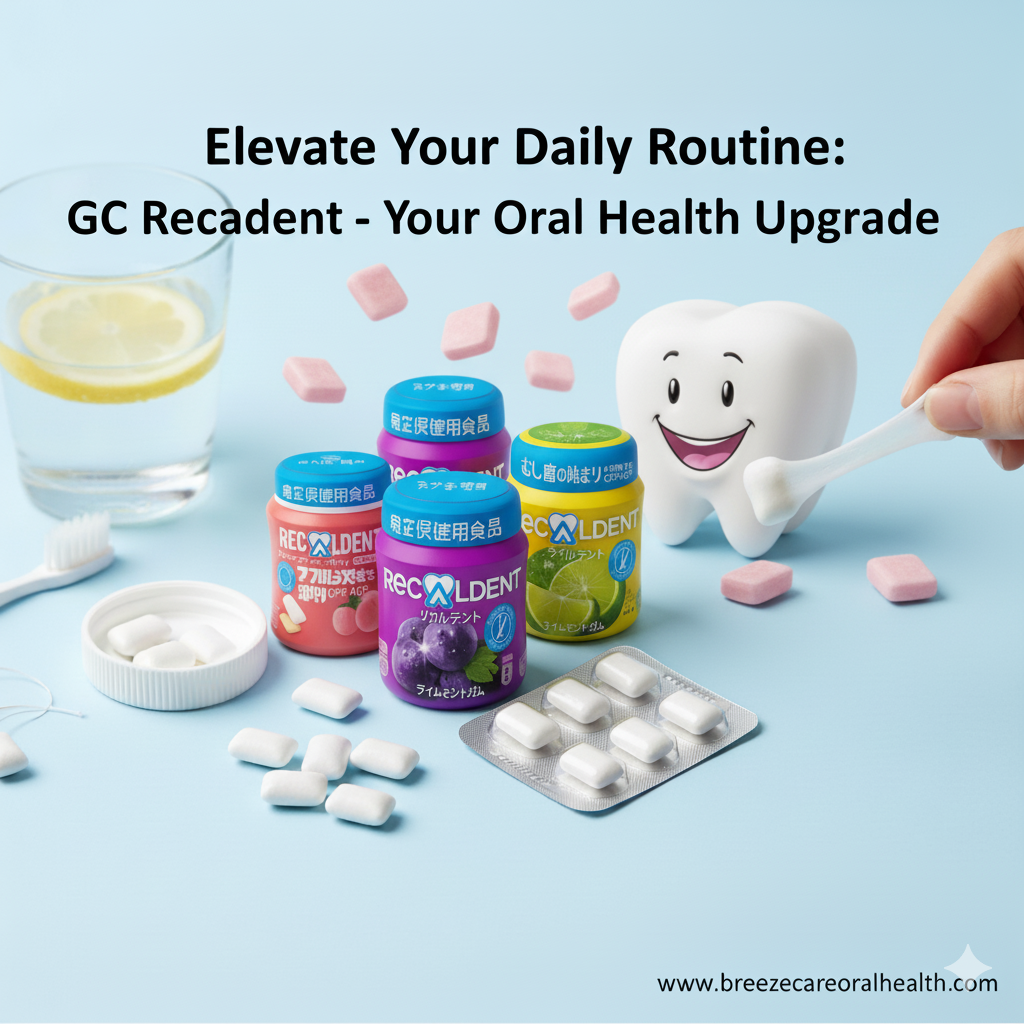
BreezeCare carries a range of Recaldent chewing gum flavours and formats, including PLUS and Everyday options.
General information only: This article provides general oral-health information and is not a substitute for individual medical or dental advice. Persistent or severe dry mouth should be assessed by an appropriate health professional.
Recaldent® is a trademark of the Mondelēz International group, used under licence.


