
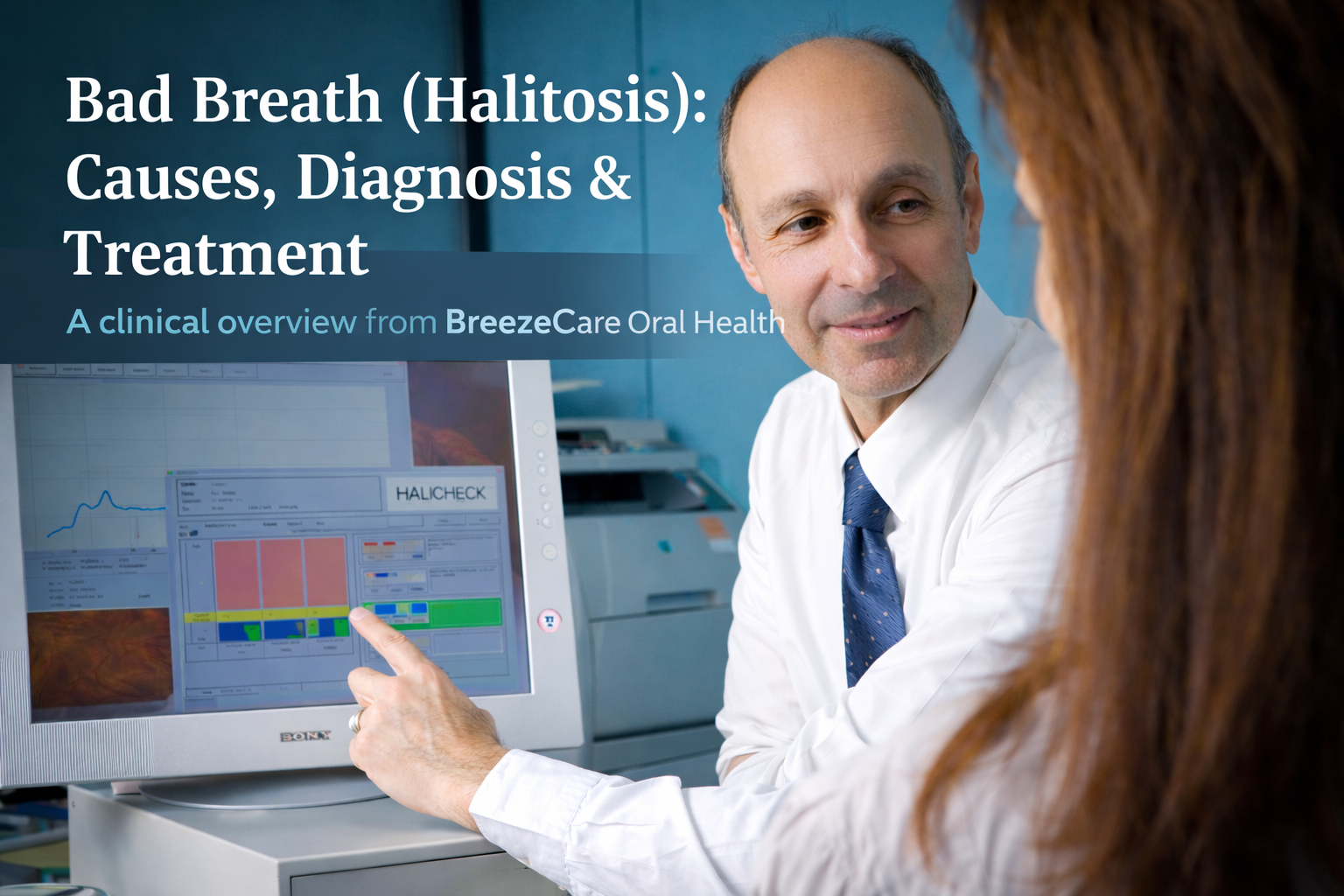
Bad breath (halitosis) is a common concern that can affect confidence, communication, and quality of life. While occasional odour is normal, persistent bad breath is often multifactorial and can involve patterns in the mouth, saliva flow, and daily routine habits.
This article provides an educational overview of bad breath, including common indicators, typical contributors, how objective measurement is used in clinic settings, and routine-based principles that guide long-term management.

What is bad breath?
Bad breath is the presence of an unwanted odour on exhaled air during breathing or speech. It may be temporary (for example after sleep or certain foods) or persistent through the day.
In clinical settings, bad breath is treated as an indicator rather than a conclusion. The goal is to identify likely contributors and patterns, then apply routine-based strategies that improve the oral environment over time.
Common symptoms and indicators
People may notice different patterns depending on the primary contributor. Commonly reported indicators include:
- Persistent odour noticed by others
- Sour, stale, sulphur-like, or metallic taste sensations
- Morning breath that persists beyond routine cleaning
- Tongue coating, especially toward the back of the tongue
- Dry or sticky mouth feeling (often on waking)
- Throat sensations, post-nasal patterns, or tonsil debris
Because perception can be unreliable, these indicators are most useful when combined with a review of routine habits and (where available) objective measurement.
What causes bad breath?
In most cases, bad breath originates within the mouth. It is commonly linked to bacterial activity that breaks down proteins from oral coatings, debris, saliva, and oral tissues.
This bacterial breakdown can produce odour-associated gases, including volatile sulphur compounds (VSCs). These compounds are a frequent focus of objective measurement in clinic settings.
Common contributors include:
- Bacterial imbalance: higher bacterial load in low-oxygen areas (tongue surface, gumline, under gums).
- Tongue surface build-up: coating varies by person and can intensify with timing patterns and technique gaps.
- Gum and periodontal factors: bleeding gums, floss odour, and deeper gum pockets can increase bacterial activity.
- Dry mouth patterns: reduced saliva flow limits natural clearance and can make odour more noticeable.
- Throat and airway patterns: mucus build-up may contribute, especially with morning breath timing.
- Diet, smoking, and medications: can influence dryness, bacterial balance, and perceived odour.
For a more detailed overview, see Bad Breath — Causes & Contributing Factors.
Tongue-related odour: why the tongue is often central
The tongue is one of the most commonly reviewed areas when assessing bad breath. Its textured surface can retain bacteria, mucous, and debris, particularly toward the back where brushing may not reach consistently.
In many cases, routine technique and consistency matter more than intensity. Coating that remains undisturbed for longer periods may allow greater bacterial activity compared with coating that forms more recently.
Related reading: Bad Breath Tongue Related Odour.
Morning breath: a timing pattern, not a separate “type”
Morning breath is commonly linked to overnight reductions in saliva flow, lower oral oxygen availability, and reduced tongue movement. These changes can favour bacterial activity while sleeping.
Thicker nasal or throat mucus may also contribute overnight, especially when combined with mouth dryness or mouth breathing patterns.
Related reading: Morning Breath.
Why perception alone can be unreliable
Bad breath is difficult to judge reliably using perception alone. Some people underestimate their breath, while others become anxious and overestimate it. Taste sensations and “dry mouth feel” can also be mistaken for measurable odour.
This is one reason objective breath measurement can be useful in clinic-led cases: it provides a consistent baseline to support a structured discussion and routine review.
Objective breath measurement: OralChroma
In clinical settings, devices such as OralChroma™ can measure specific gases commonly associated with oral odour. OralChroma measures three volatile sulphur compounds individually:
- Hydrogen sulphide
- Methyl mercaptan
- Dimethyl sulphide
Measurements are interpreted alongside oral examination and routine review. Patterns over time are typically more useful than a single reading.
Related reading: Bad Breath OralChroma Breath Analysis.
How bad breath is addressed in practice
Effective management focuses on routine-based principles rather than masking odour. Depending on contributors, this may involve:
- Improving daily oral hygiene technique and consistency
- Addressing tongue surface build-up (including the back of the tongue)
- Supporting saliva flow and hydration patterns
- Reviewing timing patterns (morning vs daytime odour)
- Considering gumline and interdental cleaning habits
For a structured overview of contributors, see: Bad Breath Causes and Contributing Factors.
Where KForce fits
BreezeCare's KForce Oral Hygiene System is built around the same principle of using a structured routine rather than relying on one product alone. It brings together tooth cleaning, tongue hygiene, rinsing and ongoing maintenance, with each product having a defined role within the routine.
If bad breath or halitosis is your primary concern, the KForce Halitosis Starter Kit is the recommended place to begin because it establishes the complete KForce routine from the outset.
To understand the broader system, including complete kits, targeted support and ongoing maintenance, visit the KForce Oral Hygiene System.
When professional assessment may help
Professional assessment may be useful when breath concerns persist despite a consistent routine, when gum bleeding or dry mouth patterns are present, or when objective measurement would provide clarity and reassurance.
Clinic-led assessment often combines breath measurement, oral examination, and routine review to guide next steps.
Related reading: Bad Breath Clinical Case Studies.
Where to go next
Explore BreezeCare bad breath education and the KForce system:


